
Relationship Therapy in Calgary
For the patterns that keep showing up with partners, dates, friends and family. Counselling for you, on your own, in person in Calgary and online.
Therapy for People offers relationship therapy and counselling in Calgary, in person at Langley House in Bankview and online. It is counselling for you, on your own, about the relationships across your life: partners, dating, friends, family and the boundaries between you. You can work with Anne Klein, Canadian Certified Counsellor, or Divya Sharma, Registered Social Worker.
Individual sessions with Anne start at $235 for 60 minutes, and with Divya at $220 for 60 minutes. We direct bill Sun Life and Telus Health. Your first step is a free meet and greet.
Who you will work with
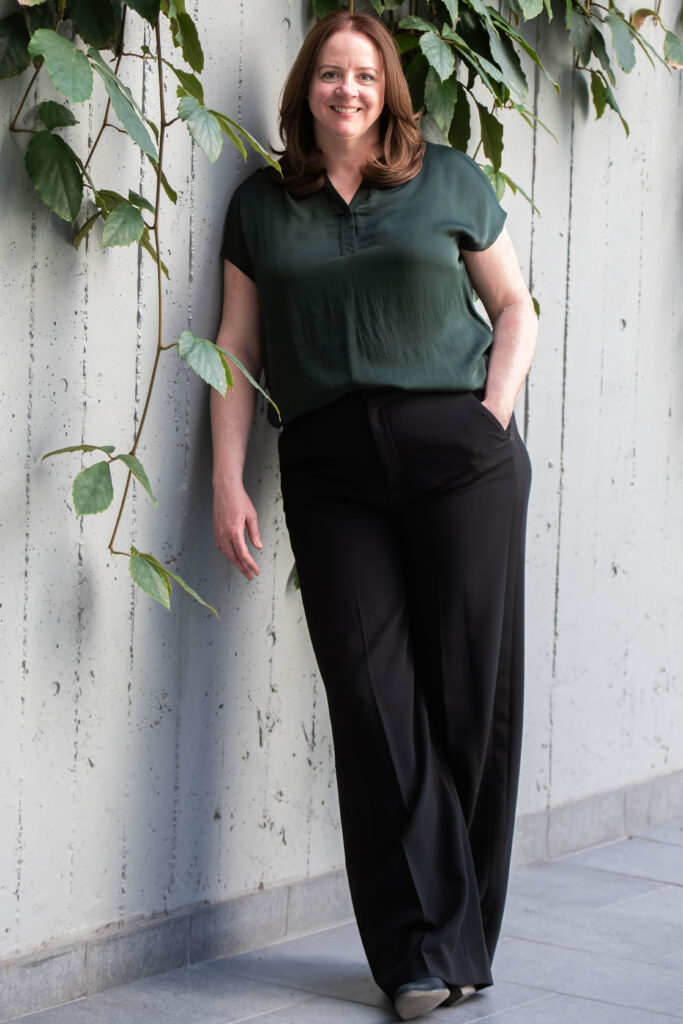
Anne Klein, B.Comm, M.A., CCC
Psychotherapist and counsellor, founder of Therapy for People
Anne works with the roots of long-held relationship patterns, using Transactional Analysis, redecision therapy, attachment-focused work and Advanced Integrative Therapy (AIT). She also offers couples counselling.

Divya Sharma, BSc, BSW, MSW, RSW
Registered Social Worker
Divya supports people through relationship challenges with an integrative approach: Emotion-Focused Therapy, DBT, CBT, ACT, mindfulness and family systems theory. She leads The Relationship Lab, a group for women, and offers family therapy.
Relationship counselling is not only for couples
Relationship problems are not limited to romantic couples. They show up with the people you date, your friends, your family and the people you work with, and in the relationship you have with yourself.
Our work is relational. You can come to relationship counselling on your own, whether or not anyone else in the relationship is ready to come. People bring:
- The same fight, the same kind of partner, the same familiar feeling at the end.
- Choosing partners who are emotionally unavailable, or partners who are too clingy.
- A breakup you cannot seem to get past, or not finding a partner at all.
- Dating that has worn you out, or old hurts that follow you into every new date.
- Friends who are hard to make or keep, or conflict with a friend you do not know how to navigate.
- Tension with family, and boundaries that are hard to set or hold.
- People pleasing and codependency, or saying "it's fine" when it isn't.
- Longing to be close to someone, and fearing it at the same time.
If you and your partner want to come in together, Anne offers couples counselling. If your family wants to come in together, Divya offers family therapy.
Recurring relationship patterns
Have you ever felt deja vu in a relationship? The same fight with your partner, a new job that echoes the last one, a familiar power struggle with your family. Eric Berne, the founder of Transactional Analysis (TA), called this repeating story the script.
As children, we make decisions about ourselves and other people so we can get the care we need. Someone who struggles in relationships may have decided, early on, "It isn't safe to trust others." That decision made sense then, and it can keep you stuck now.
Anne's relational view is that we often repeat old dynamics instead of responding to what is happening between us now. Counselling is a place to see the pattern, understand your part in it, and practise new ways of relating. Read more in The Story of a Life.
Attachment issues and where they begin
"To feel attached is to feel safe and secure," in the words of Jeremy Holmes. Our attachment system is the part of us that senses whether it is safe to be close to people, to depend on them, and to feel loved.
As Anne writes in Finding Love: Attachment Matters, "humans don't love in isolation; they love in relation to others." Our early experiences with caregivers shape how we perceive and receive love, and the relationships that follow can deepen those patterns.
You might wonder how you can heal if you keep ending up in painful relationships. Anne's answer is that those relationships can show you where your attachment wounds are, and that healing often calls for a safe and secure person: a therapist, a mentor or a healthy relationship. When the hurt goes back to your earliest relationships, read about attachment trauma therapy.
Dating difficulties and friendship problems
Dating can wear you down. Every new person can arrive with the shadows of the ones before, and a slow reply to a text can feel like the last betrayal all over again. In Dating in the Modern Age, Anne writes that what modern relationships call for is healing your past so you don't drag it into your present.
Some people find themselves clinging to a partner for love and acceptance, trying to fill a longing inside. Pia Mellody, known for her work on codependency, calls this love addiction. Her book Facing Love Addiction, on our resources page, looks at its painful cycle with love avoidance.
Friendships matter just as much. Some people find friends hard to make or keep, or meet conflict they do not know how to navigate. Others worry about what a friend's text really meant.
Family conflict and boundaries
Knowing you need boundaries is one thing. Setting them is another, especially when you fear disappointing someone, starting a conflict or damaging a relationship. It is easy to slip into people pleasing, and lose yourself to keep the peace.
In counselling, you can look at what has happened in the past when you tried to say what you need, and what feels hardest now. Together you might choose a small, realistic step and practise how to say it. At your next session, you can talk about what happened and what you might do differently.
For some women, trouble with boundaries and trust goes back to missing nurture, protection and guidance from their mothers. Anne works with this wound, which Kelly McDaniel named Mother Hunger. She also offers Family Constellations, which looks at the family system you belong to.
How Anne and Divya work with relationships
Anne Klein, CCC, works with the roots of long-held patterns. She uses Transactional Analysis to look at how you communicate and the life script behind a pattern, and redecision therapy to revisit the early decisions underneath it. Her work is attachment-focused: your therapist offers a safe, steady relationship where you can experience what it feels like to have someone emotionally available to you.
Anne also uses Advanced Integrative Therapy (AIT), a gentle, body-based approach to past hurts. Her couples work is informed by TA and her ongoing training in Relational Life Therapy.
Divya Sharma, RSW, has more than 11 years of experience in mental health and clinical practice, including facilitating groups and supporting people through relationship challenges. She brings warmth and a calm, grounded presence, and helps people understand their patterns and develop new ways of relating.
She draws on Emotion-Focused Therapy, which works with the feelings and needs underneath conflict, and on DBT skills for asking for what you need and saying no. She also uses CBT, ACT, mindfulness and family systems theory, and her work is trauma-informed and culturally sensitive.
Divya also leads The Relationship Lab, a small, therapist-led group for women. It looks at friendships, partners, family and work: communication, boundaries, people pleasing, conflict and the patterns we bring into relationships.
Your first step
Book a free meet and greet with Anne or Divya: a no-obligation conversation to see if what you want and what we do are aligned. Sessions are online and in person. From November 1, 2026, in-person sessions are at Langley House, 1909 17th Ave SW in Bankview, Calgary, with free parking.
The most important thing in choosing a therapist is the relationship, so choose the person you feel safe and at ease with. A helpful place to begin is about 10 sessions, weekly for the first four weeks. After that, how long you come is always your choice.
Common questions
Can I go to relationship counselling on my own?
Yes. Relationship counselling at Therapy for People is for individuals, and you can work on any relationship in your life: a partner, dating, friends, family or work. No one else needs to come to your sessions.
How much does relationship counselling cost at Therapy for People?
Individual sessions with Anne are $235 for 60 minutes, $290 for 75 minutes, $345 for 90 minutes and $460 for two hours. Individual sessions with Divya are $220 for 60 minutes, $275 for 75 minutes and $330 for 90 minutes. Couples counselling with Anne is $330 for 90 minutes.
We direct bill Sun Life and Telus Health. Divya is a Registered Social Worker, and many workplace benefit plans cover RSW services. Coverage for counselling with Anne varies by plan, so check your own plan.
See all fees and insurance.
What is the difference between relationship counselling and couples counselling?
Relationship counselling here is individual: you come on your own to work on any relationship in your life, romantic or not. Couples counselling brings both partners in to work on their relationship together. At Therapy for People, couples counselling is with Anne, and families can come in together for family therapy with Divya.
Do you work with attachment issues?
Yes. Anne's work is attachment-focused: your therapist offers a safe, steady relationship where you can experience what it feels like to have someone emotionally available to you, and over time you can take what you learn into your other relationships. Read more about attachment therapy.
Is relationship counselling available online?
Yes. Sessions are offered online and in person. From November 1, 2026, in-person sessions are at Langley House, 1909 17th Ave SW in Bankview, Calgary, with free parking.
What happens first?
Book a free meet and greet with Anne or Divya: a no-obligation conversation to see which therapist is the right fit for you. A helpful place to begin is about 10 sessions, weekly for the first four weeks, and how long you come is always your choice.
Ready to talk?
Book a free meet and greet with Anne or Divya. You can come on your own, whatever relationship is on your mind.
Prefer to talk first? Call 587-606-0301. In person at Langley House, 1909 17th Ave SW, Calgary, or online.